INTRODUCTION
Older adults’ experiences of the COVID-19 pandemic were profoundly shaped by the intersection of social context, cultural norms, and institutional structures (Igarashi et al., 2022; Masten, 2014; Ungar, 2012). While older adults living in the community often retained autonomy through adaptive coping, physical activity, digital communication, and outdoor activities, residents in aged residential care (ARC) experienced prolonged isolation due to infection control measures, restricted visitation, and the suspension of collective activities (Colucci et al., 2022; Garcia-Prado et al., 2022; Sims et al., 2024). ARC settings are residential homes where people live, form relationships, and sustain everyday routines. Importantly, they are very different from hospital wards or clinical environments. Yet measures designed for acute clinical containment during the COVID-19 pandemic were often misaligned with the social and relational nature of ARC environments (Hughes et al., 2021).
From a nursing perspective, infection control measures and clinical containment challenged the core tenets of person-centred and relationship-based care by limiting autonomy, disrupting rational continuity, and constraining opportunities to uphold residents’ dignity (Glette et al., 2024; Hughes et al., 2021; McCance & McCormack, 2025). During lockdowns, ARC staff were often compelled to prioritise infection control over psychosocial engagement, resulting in moral and professional tensions (Bunn et al., 2021). Evidence indicated that enforced isolation intensified loneliness and disrupted relational continuity for residents, undermining key determinants of psychosocial wellbeing and exposing the limitations of care models that privilege physical safety over relational and social connection (Bogati & Pirret, 2021; Chen et al., 2022). Emotional exhaustion, moral distress, and compassion fatigue became widespread among nurses who were simultaneously acting as caregivers, counsellors, and surrogates for family members (Glette et al., 2024). These conditions reinforced that resilience in ARC was not solely an individual attribute, but an ecological process shaped by social, organisational, and cultural systems (Ungar, 2012).
Ecological models conceptualise resilience as a dynamic process arising through interactions between the individual and their social, cultural, and institutional environments, rather than as fixed individual or personality traits (Masten, 2014; Ungar, 2012). Resilience is commonly defined as the capacity to sustain positive adaptation in the context of adversity, contingent on access to supportive relationships, resources, and culturally meaningful systems of care (Luthar et al., 2014; Masten, 2014). This framing addresses critiques of resilience as an individualising construct by foregrounding the structural and relational conditions that enable or constrain adaptive capacity. Within ARC facilities resilience is therefore understood as collectively enacted through relationships, care practices, and organisational environments. Care environments characterised by trust, continuity, and cultural safety were more likely to mitigate the psychosocial impact of isolation, whereas more rigid organisational contexts appeared to amplify distress (Glette et al., 2024; Hughes et al., 2021; McCance & McCormack, 2025). In this context, the COVID-19 pandemic made visible the relational and culturally mediated nature of resilience, sustained through networks of care rather than individual strength alone.
In Aotearoa New Zealand, Te Tiriti o Waitangi (Te Tiriti) provides a foundational framework to achieve safe and effective care and promote health equity for Māori at practice, organisational and health system levels (Ministry of Health, 2024; Nursing Council of New Zealand, 2025). Māori are underrepresented in ARC relative to need, reflecting a complex interplay of factors including whānau (family) preferences for care at home, concerns about cultural safety, and structural inequities in access and funding (Cheung et al., 2021; Health Quality & Safety Commission, 2019). In nursing practice, Te Tiriti obligations are realised through relationships between nurses, residents, and whānau that are grounded in manaakitanga (care and respect) and whanaungatanga (relational identity) and require ongoing critical self-reflection and recognition of power imbalances (Nursing Council of New Zealand, 2025; Ramsden, 2000). Organisationally, ARC providers are responsible for creating environments that enable culturally safe practice, including workforce capability, inclusive policies, and Māori participation in care and decision making (Health Quality & Safety Commission, 2019; Nursing Council of New Zealand, 2025). At the system level, honouring Te Tiriti requires governance structures that support Māori partnership and equitable distribution of resources (Waitangi Tribunal, 2023). Together these interacting levels demonstrate that resilience is not solely achieved by individuals but emerges from the alignment of culturally safe relationships, organisational practices, and health system commitments to equity.
However, the pandemic catalysed a critical reflection on the structure and ethos of ARC systems. Nurse leaders have argued that long-term care must move beyond a narrow biomedical model of safety toward a more holistic paradigm of relational and cultural wellbeing (Hughes et al., 2021). Aotearoa New Zealand offers a distinctive context for understanding relational and culturally grounded resilience in ARC. The coexistence of Western biomedical models of care and Māori worldviews presents an opportunity to examine how cultural safety and collective wellbeing can be enacted within institutional practice.
Aim
The aim of this narrative review was to synthesise international and Aotearoa New Zealand evidence on coping, resilience, and wellbeing among older adults living in ARC during and beyond the COVID-19 pandemic. Specifically, this review aimed to: 1) examine how older adults in ARC adapted to the psychosocial impacts of COVID-19 restrictions; and 2) identify patterns in practices, relational processes, and care approaches that appear to support collective, culturally grounded, and digitally inclusive resilience in post-pandemic care environments. This review aims to provide a foundation for informing policy, clinical practice, and nursing leadership by highlighting key themes and possibilities for enhancing holistic wellbeing in ARC, while recognising the interpretive and exploratory nature of the available evidence. In doing so, it seeks to ensure that lessons from COVID-19 can contribute to ongoing reflection and development of care quality, relational support, and cultural responsiveness.
METHODS
Design
A narrative review of the literature was conducted using a semi-structured approach to synthesise and interpret evidence on coping and resilience among older adults living in ARC during the COVID-19 pandemic. Narrative reviews are particularly suited to integrating diverse bodies of evidence, identifying patterns across studies, and developing conceptual understanding where the aim is interpretive synthesis rather than evaluation of intervention effectiveness (Green et al., 2006). To enhance transparency in study identification and selection, the review process was guided by the Preferred Reporting Items for Systematic Reviews and Meta-Analyses (PRISMA) reporting guideline (Page et al., 2021).
Search Strategy
A comprehensive search was conducted across four electronic databases: CINAHL, PubMed, ProQuest and Scopus, on 22 May 2025. The search strategy was developed iteratively, informed by an initial scoping of the literature and refined through consultation with a research librarian. The Boolean operators “AND” and “OR” were used. The search string used the following key words and medical subject heading terms (MESH): (“aged care” OR “residential care”) AND (“coping” OR “resilience”) AND (covid* OR covid-19 OR coronavirus OR 2019-cov OR sars-cov-2 OR cov-19). Additional records were identified through hand-searching to identify eligible research in Aotearoa New Zealand specific journals, some of which are not indexed in databases. Inclusion criteria were developed to guide the selection process and were applied iteratively during screening. Studies were eligible if they were original, peer-reviewed, full-text articles published in English between 2020 and 2025 and focused on residents aged 65 years and older living in ARC or long-term care. The review was restricted to studies examining coping, resilience or wellbeing during or after the COVID-19 pandemic. Exclusion criteria included review articles, reflections, editorials and secondary analyses, and studies not directly addressing ARC settings and those not addressing psychosocial outcomes.
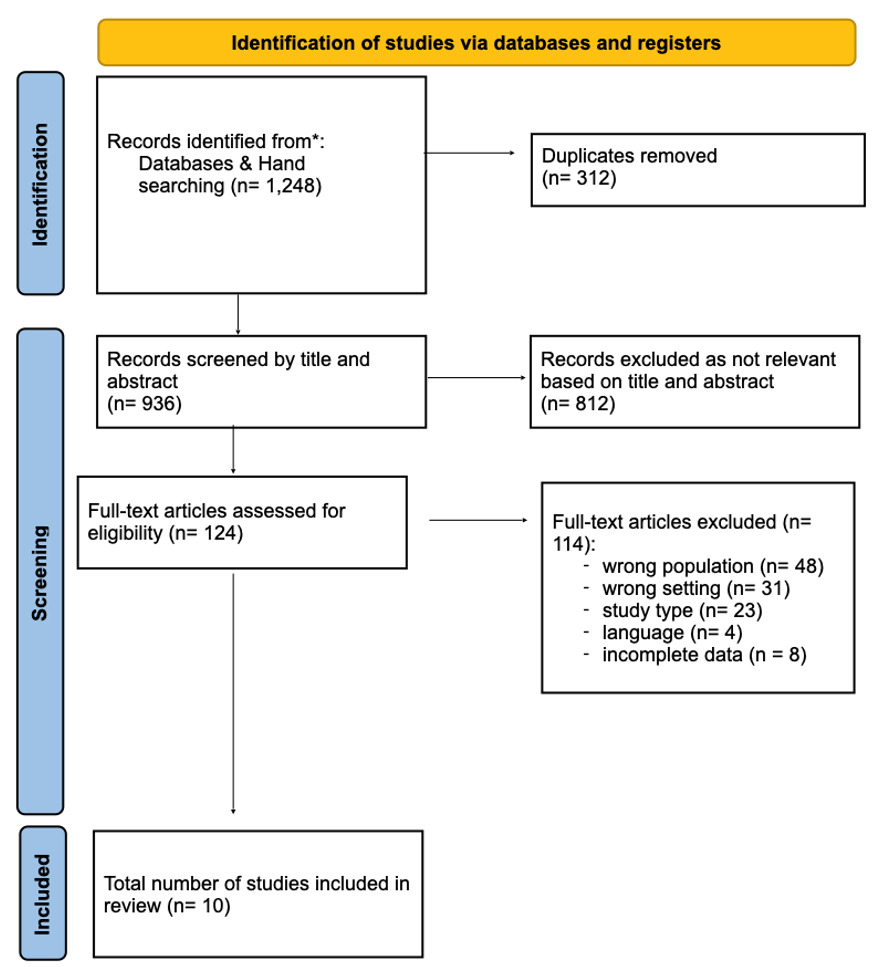
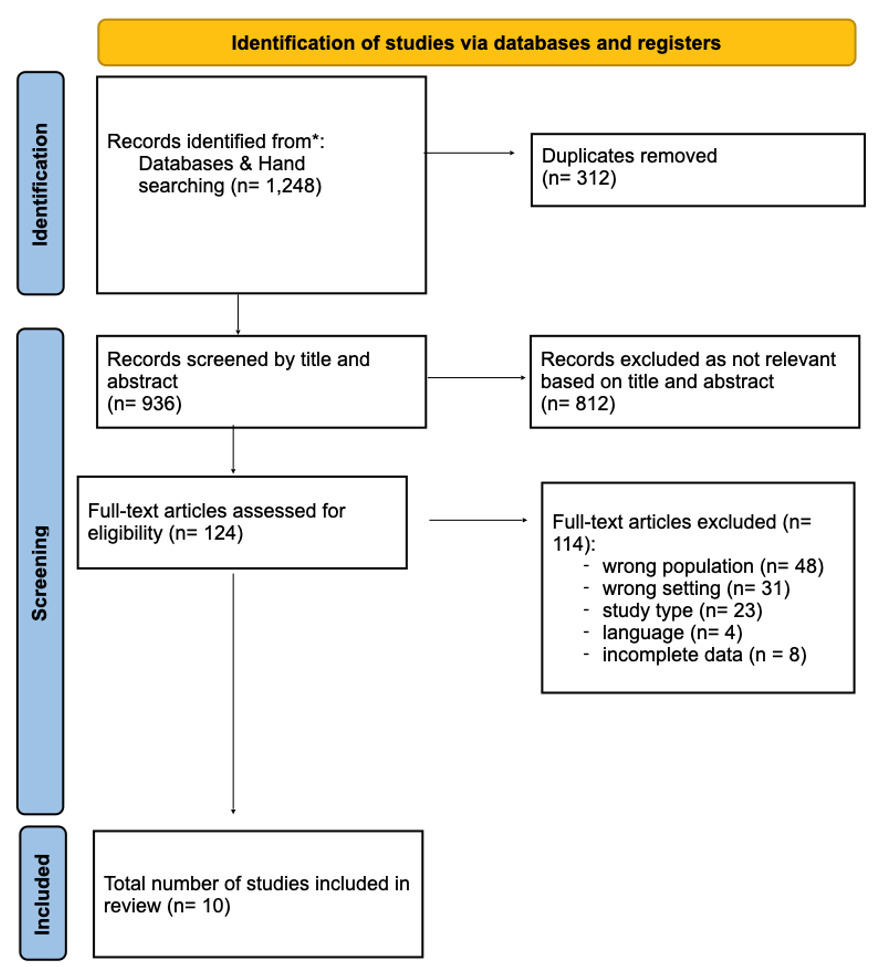
Searches returned a total of 1,248 records. After removal of 312 duplicates, 936 records remained for title and abstract screening. Screening was conducted systematically, with studies excluded where titles and abstracts did not meet population, setting, or outcome criteria. A total of 124 full-text articles were assessed for eligibility. Of these, 114 were excluded for the following reasons: wrong population (n=48), setting outside of ARC (n=31), ineligible study type (n=23), language (n=4), and incomplete or insufficient data (n=8). From these, ten studies met the inclusion criteria and were included in the review. The PRISMA flow diagram (Page et al., 2021) illustrates the search process and selection of articles for final inclusion (Figure 1).
Methodological quality was appraised using the Critical Appraisal Skills Programme (CASP) (2022) checklist, indicating moderate to high methodological quality across the ten studies. Most studies demonstrated clear methodological justification, appropriate data collection and analysis, and ethical rigour. Common limitations included incomplete reporting of recruitment strategies, limited reflexivity, and insufficient detail regarding analytic procedures. Despite these limitations, all studies were considered sufficiently robust to contribute credible evidence and were retained in the narrative synthesis.
Reflexivity, data analysis and synthesis
The analysis was informed by an ecological understanding of resilience, drawing on the work of Ungar (2012), alongside broader socio-ecological perspectives (Masten, 2014). These frameworks conceptualise resilience as a dynamic and contextually embedded process shaped by interactions between individuals, their social environments, and access to culturally meaningful resources. This theoretical lens informed the analytical process by directing attention to how resilience within ARC settings was enacted relationally and collectively, through culturally embedded practices, institutional support, and everyday interactions between residents, staff, and wider communities.
Qualitative data were analysed using reflexive thematic analysis, guided by Braun and Clarke’s (2020, 2022) approach. This approach aligns with a narrative review design and supports an interpretive synthesis of qualitative findings, focusing on patterns of meaning rather than descriptive mapping or aggregation of findings. Analysis involved iterative reading and re-reading of included studies to develop familiarity with the material, followed by organising evidence and ideas into categories, refining those categories, and formation of themes. Quantitative data, including from mixed-methods studies, were interpreted at the level of reported results and integrated into the developing themes to provide complementary evidence regarding psychosocial outcomes, organisational practices, and contextual influences on resilience.
Reflexivity was embedded throughout the analytic process to acknowledge the influence of my clinical experience in ARC settings on the interpretation of the evidence (Jamison et al., 2023; Lazard & McAvoy, 2017). I am a tauiwi (non-Māori) nurse with clinical, leadership, and nurse educator experience in ARC and primary health care, including longstanding involvement in Indigenous nurse-led practice internationally. This experience informed an ecological and relational orientation to the review and underpinned my sustained commitment to equity orientated, culturally safe care. Recognising that interpretations of Māori and Pacific worldviews are shaped by my cultural positioning, the analysis was guided by Indigenous scholarship, Te Tiriti o Waitangi principles, reflexive practice, and ongoing dialogue with colleagues to support culturally respectful interpretation.
Ongoing critical reflection was supported through regular dialogue with colleagues, who challenged emerging interpretations and the development of themes. Although formal independent coding was not undertaken, these discussions encouraged consideration of alternative explanations, strengthened analytical reflexivity, and enhanced the credibility of the interpretive synthesis. Consistent with reflexive thematic analysis, credibility was established through transparency, reflexivity, and a coherent analytical process rather than consensus between multiple coders (Braun & Clarke, 2020, 2022). Reflexive insights and analytic decisions were documented in a reflective journal to enhance transparency and critical self-awareness in analytical decision making.
FINDINGS
Across the ten studies included in this narrative review, research represented diverse international ARC contexts including Aotearoa New Zealand (Frey & Balmer, 2023; Moir et al., 2025; Officer et al., 2022), Australia (Gilbert et al., 2025), Belgium (Kaelen et al., 2021); Canada (Ickert et al., 2021). Ireland (O’Caoimh et al., 2020); United Kingdom (Dixon & Stubbs, 2025), a joint Netherlands-Belgium study (Noten et al., 2022); and a joint United Kingdom-Canada study (Chapman et al., 2024). Six studies employed qualitative methodologies (Dixon & Stubbs, 2025; Frey & Balmer, 2023; Gilbert et al., 2025; Ickert et al., 2021; Kaelen et al., 2021; Moir et al., 2025), providing rich contextual insights into lived experience, coping strategies, and the cultural and institutional influences shaping wellbeing. Two were quantitative studies (Noten et al., 2022; O’Caoimh et al., 2020) that contributed evidence on measurable psychosocial outcomes, staff perspective, and organisational practices associated with resilience. Two studies employed mixed methods designs (Chapman et al., 2024; Officer et al., 2022) integrating quantitative data with qualitative insights to examine ARC experiences across jurisdictions. Collectively, these studies provided a nuanced and multidimensional understanding of coping and resilience among older adults and staff in ARC facilities during and beyond the COVID-19 pandemic (Supplementary File).
Interpretative synthesis of the literature identified three interrelated themes that were consistently evident across international and Aotearoa New Zealand contexts: 1) coping through connection; 2) meaningful routine and purpose; and 3) digital adaptation and inclusion. Although presented separately, these themes were interconnected and reflected an ecological understanding of resilience, whereby wellbeing emerged through interactions across nested ecological systems, including individuals, relationships, organisational practices, and broader sociocultural contexts.
Social connections
Across the reviewed studies, coping was relational rather than individualised, closely tied to the sustaining of meaningful relationships, a sense of belonging and the continuity of shared identity. Residents who were able to maintain interpersonal and community connections, whether through family contact, peer relationships within facilities, or digital communication, demonstrated greater emotional stability and wellbeing (Chapman et al., 2024; Ickert et al., 2021; Kaelen et al., 2021). Relational autonomy, or the ability to exercise choice in interactions, was strongly associated with reduced distress and improved psychosocial outcomes (Dixon & Stubbs, 2025; Noten et al., 2022). Dixon & Stubbs (2025) further emphasised that connection was sustained not simply through contact but through reciprocity, shared decision-making, emotional validation, and the preservation of identity within relationships, highlighting resilience as a co-constructed rather than individual process. Even brief or creatively facilitated contact, such as socially distanced visits or technologically mediated communication, supported psychological safety and trust (Officer et al., 2022).
In Aotearoa New Zealand, studies by Frey & Balmer (2023), Moir et al. (2025), and Officer et al. (2022) foregrounded the centrality of cultural frameworks in shaping resilience. Māori and Pacific residents drew on whanaungatanga and wairua (spirituality) as protective anchors during isolation. Practices such as karakia (prayer), storytelling, and culturally informed activities created a rhythm of belonging, continuity, grounding, and emotional equilibrium. These culturally embedded practices, facilitated by staff attuned to Indigenous values, acted as relational rituals that transformed care settings into culturally safe communities, even under lockdown restrictions. Officer et al. further highlighted the broader importance of Te Whare Tapa Whā model linking spiritual, physical, mental, and family dimensions of health. Its application during the pandemic reinforced that relational and spiritual care are inseparable, positioning cultural practice as integral to coping rather than supplementary to biomedical routines (Officer et al., 2022). Resilience in aged care is understood through a lens of relational autonomy and interdependence, acknowledging that wellbeing emerges through shared meaning, cultural affirmation, and trust within networks of care (Dixon & Stubbs, 2025).
The concept of relational resilience - the capacity to adapt through social bonds rather than individual coping - was consistent across international contexts, though the underlying frameworks differed. In Australian retirement villages, shared humour, storytelling and mutual support sustained a sense of collective community identity (Gilbert et al., 2025). European studies highlighted the centrality of staff and volunteer facilitation in mitigating loneliness and maintaining psychosocial support, although the emphasis was less on culturally grounded practice and more on procedural and organisational strategies to maintain social contact (Kaelen et al., 2021; Noten et al., 2022). Ickert et al. (2021) in Canada and O’Caoimh et al. (2020) in Ireland reported that relational engagement by staff compensated for the absence of family presence, reinforcing the emotional interdependence between residents and caregivers. These convergences suggest that, across systems, relational resilience and the capacity to adapt through social bonds, was foundational to coping, albeit expressed through different cultural, institutional, and moral economies of care.
Meaningful routines and purpose
The preservation of routine and engagement in purposeful activity functioned as a stabilising mechanism, reinforcing predictability and identity amid uncertainty. Structured patterns, such as shared meals, physical exercise, creative pursuits, and spiritual or cultural rituals, restored a sense of agency and control (Chapman et al., 2024; Gilbert et al., 2025). Residents’ ability to make even small decisions about daily activities (such as timing, clothing, or social participation) was strongly associated with higher morale and reduced depressive symptoms (Ickert et al., 2021). Conversely, overly rigid institutional routines that prioritised infection control over autonomy were associated with a sense of disempowerment and distress, highlighting the psychosocial cost of procedural safety. Dixon & Stubbs (2025) similarly noted that predictable, yet flexible, structures allowed residents to exercise micro-agency, making small but meaningful choices that reaffirmed identity and preserved dignity within constrained environments.
In Aotearoa New Zealand, routine and purposeful activity were often intertwined with cultural and spiritual practices. Māori and Pacific residents drew on collective rituals, storytelling, and ceremonial routines to maintain continuity of identity and wairua when ordinary patterns were disrupted (Frey & Balmer, 2023; Moir et al., 2025). Practices such as shared karakia and culturally informed care routines were not only symbolic but provided tangible psychological safety, creating familiar rhythms that helped both residents and staff navigate uncertainty. Officer et al. (2022) extended this insight through Te Whare Tapa Whā, showing that maintaining balance across physical, spiritual, mental, and relational domains required daily acts of cultural reaffirmation. The use of culturally anchored routines reinforced whanaungatanga, strengthened social cohesion, and offered avenues for intergenerational engagement even under visitation restrictions.
Kaelen et al. (2021) and Noten et al. (2022) highlighted a more procedural dimension to routine. They found that regularised schedules, including mealtimes, communal activities, or outdoor access, functioned as institutional coping strategies (Kaelen et al., 2021; Noten et al., 2022). Across all countries, maintaining a sense of purpose, through choice, creativity, or collective engagement, was consistently linked to resilience and psychological wellbeing.
Digital technology and inclusion
Digital adaptation emerged as both a coping mechanism and a marker of organisational resilience. When physical proximity was restricted, residents, families, and staff used technology, video calls, online gatherings, and social media, to sustain communication and emotional closeness (Chapman et al., 2024; Ickert et al., 2021; Kaelen et al., 2021). Successful digital inclusion, however, depended on staff facilitation, accessibility, and cultural relevance. For Māori and Pacific residents, digital platforms extended opportunities for whanaungatanga and wairua (Frey & Balmer, 2023; Moir et al., 2025). Karakia, storytelling, and family gatherings could all be conducted virtually, allowing residents to sustain relational and spiritual ties, transforming technology into a culturally resonant medium of care. These initiatives required proactive staff engagement to ensure inclusivity and cultural alignment.
By contrast, European and North American studies primarily framed digital adaptation as an organisational strategy. Kaelen et al. (2021) and Noten et al. (2022) described how facilities used digital tools to maintain institutional routines and resident-family contact, while Ickert et al. (2021) noted that technological engagement reduced isolation only when complemented by empathetic staff facilitation. Technology extended rather than replaced the social and spiritual dimensions of connection, positioning digital inclusion as a sustainable component of post-pandemic psychosocial care (Dixon & Stubbs, 2025). However, equitable access, staff training, and culturally responsive implementation were critical to its success.
DISCUSSION
The aim of this narrative review was to synthesise evidence on coping, resilience, and wellbeing among older adults living in ARC during and beyond the COVID-19 pandemic, with the purpose of informing policy and practice. Ten studies were included in the review. Guided by an ecological understanding of resilience (Luthar et al., 2014; Masten, 2014; Ungar, 2012), the synthesis highlighted that resilience was enacted not solely at the individual level, but through interactions between residents, staff, institutional practices, and culturally grounded forms of care. Qualitative studies illuminated the centrality of relational and culturally grounded approaches, such as Māori and Pacific collective rituals, spiritual practices, and staff-facilitated social connection in supporting coping and meaning-making. Quantitative and mixed-methods studies complemented these findings by demonstrating measurable associations between structured routines, organisational support, digital connectivity, and psychosocial wellbeing. Together, these complementary forms of evidence informed an interpretative synthesis of resilience in ARC.
From the reviewed studies, coping and resilience were relational, collective, and culturally mediated processes rather than individual psychological traits. However, the form of relational resilience varied: Aotearoa New Zealand foregrounded Indigenous frameworks of interconnected wellbeing (Frey & Balmer, 2023; Moir et al., 2025; Officer et al., 2022); Australia and Canada, including the UK-Canada comparative study by Chapman et al. (2024), highlighted communal peer support and maintaining social connectedness in sustaining wellbeing during periods of isolation (Chapman et al., 2024; Gilbert et al., 2025; Ickert et al., 2021); and European contexts emphasised institutional facilitation (Dixon & Stubbs, 2025; Kaelen et al., 2021; Noten et al., 2022; O’Caoimh et al., 2020). These cross-contextual differences underscored the need for culturally grounded, flexible, and relational models of ARC that embed psychosocial wellbeing as a core element of care rather than a supplementary concern.
Aged residential care facilities that fostered autonomy, transparent communication, and shared decision-making were better positioned to adapt effectively during lockdowns (Chapman et al., 2024; Kaelen et al., 2021; Moir et al., 2025; Noten et al., 2022; Officer et al., 2022). Residents who were informed, involved in routine decision-making, and supported in maintaining meaningful daily activities demonstrated lower levels of anxiety, loneliness, and distress (Noten et al., 2022). Beyond the studies included in this review, broader international research similarly suggests that structured routines and engagement in purposeful activity reinforce continuity of identity and mitigate the effects of social restriction (Zhao et al., 2024). Together, these findings highlight that psychosocial stability was strengthened where relational and organisational cultures emphasised choice, participation, and connection.
Relational resilience was a defining feature across contexts. Rather than conceptualising coping as an individual psychological capacity, the studies identified collective and social bonds as the foundation of adaptation. In Aotearoa New Zealand, Māori and Pacific worldviews offered distinct models of resilience grounded in whanaungatanga and wairua. Cultural and spiritual practices, including karakia, waiata (song), and tikanga (customary system of values and routines), provided emotional structure, reaffirmed belonging, and sustained continuity of care when whānau presence was limited, reflecting Te Tiriti o Waitangi principles (Frey & Balmer, 2023; Moir et al., 2025; Officer et al., 2022). Comparable dynamics were observed internationally in facilities, where humour, shared storytelling, and peer support, maintained community morale (Gilbert et al., 2025; Ickert et al., 2021), and where staff facilitation and organisational routines were pivotal in maintaining social contact (Kaelen et al., 2021; Noten et al., 2022). Further evidence from Brazil and India suggested that resource constraints prompted reliance on informal social networks and creative care practices (Garcia-Prado et al., 2022; Zhang et al., 2022). Despite contextual variation, these studies converge on the principle that connection, familial, communal, or cultural, is central to coping and resilience in ARC.
Relational and collective themes observed within ARC mirrored broader community resilience patterns. Studies of community dwelling older adults have similarly reported that social support and active coping significantly moderated anxiety among older adults (Sun et al., 2021), while Breheny & Stephens (2025) reported that community-living older New Zealanders narrated their lockdown experiences through “idyllic” stories emphasising neighbourliness, connection to nature, and collective solidarity. Similarly, Colucci et al. (2022) demonstrated that multicultural communities across Europe and Australia sustained resilience through intergenerational cooperation, cultural rituals, and mutual aid. Familial interdependence and collective trust buffered loneliness and fear among older adults in Asian communities (Chan et al., 2022; Zhang et al., 2022), while Garcia-Prado et al (2022) observed informal neighbourhood networks acting as de facto care systems in low resource Latin American settings.
These community accounts contrasted with the broader global atmosphere of fear and isolation that characterised much of the COVID-19 pandemic, often framed in dystopian terms, suggesting that wellbeing was sustained where trust, reciprocity, and a sense of shared purpose persisted. Further, where biomedical or risk-averse cultures predominated, both staff and residents experienced disengagement and decline (Giebel et al., 2022). However, findings from this review echo Indigenous and Pacific perspectives of wellbeing as inherently relational and place-based, where whanaungatanga and wairua anchor individuals within networks of reciprocity and care (Quigley et al., 2022; Usher et al., 2021). This alignment between ARC and community evidence underscores that resilience is socially produced where wellbeing is sustained through relationships of care, reciprocity, and belonging. ARC facilities are not isolated institutions but integral components of broader social and cultural ecologies.
Technology emerged as both an enabler and a potential divider through the reviewed studies, aligning with evidence elsewhere, showing how digital communication supported residents in maintaining emotional closeness with family and community, buffering against isolation (Grey et al., 2024). In both community and ARC settings, digital inclusion was most effective when embedded in local cultural frameworks, such as online karakia or collective messaging groups, that reaffirmed shared belonging (Colucci et al., 2022; Frey & Balmer, 2023; Moir et al., 2025). Equitable access to devices, connectivity, and culturally meaningful content, supported by staff facilitation and training, is integral to psychosocial wellbeing and culturally safe care (Feenstra et al., 2023; Grey et al., 2024; Warmoth et al., 2022).
Staff wellbeing was a determinant of resident coping. Burnout, moral distress, and increased workloads have direct implications for residents’ emotional outcomes (Giebel et al., 2022; Maunder et al., 2023). Facilities that promoted reflective supervision, peer debriefing, trauma-informed training, and culturally competent practice supported both staff resilience and relational continuity of care (Cockshott et al., 2024; Johnston et al., 2023). Similar patterns have been reported among community caregivers, notably family carers and volunteers in community settings faced comparable emotional strain yet drew on shared cultural rituals and social recognition (Chan et al., 2022; Garcia-Prado et al., 2022).
Future resilience within ARC requires a shift from crisis management toward community-embedded, culturally responsive, and relational models of care. Building partnerships between ARC facilities and their surrounding communities can sustain intergenerational connection and mutual care. Collectively, these findings affirm that resilience in ARC is multidimensional, relational, and culturally contingent. The pandemic illuminated that wellbeing in later life is co-produced through the interdependence of institutional structures, cultural values, and community trust, demonstrating that relational and culturally grounded care is both an ethical and clinical imperative for future practice.
Limitations
This review was conducted by a single reviewer, using structured and screening procedures and reflexive analytic processes to ensure a coherent and conceptually grounded synthesis of the available evidence. The absence of dual review processes may introduce selection and interpretative bias and limit the confirmability of findings. In addition, the variability in how key concepts such as “resilience,” “coping,” and “wellbeing” were defined and operationalised across included studies limited cross-study comparability and the consistency of synthesis. The limited volume of ARC specific evidence reflects a broader gap in the research. Findings are interpretive and exploratory, consistent with the aims of a narrative review, rather than causal or predictive.
IMPLICATIONS FOR PRACTICE
Resilience in ARC can be understood as an ecological, relational process arising through interactions between residents, staff, whānau, and organisational systems. Nurses play a central role in strengthening resilience shifting from task-focused care to fostering meaningful relationships with residents and whānau, supporting autonomy, and embedding culturally grounded and spiritually responsive care into everyday practice.
Three key nursing focused actions are indicated. First, nurses can prioritise relational continuity, for example through consistent staff-resident allocation, protected time for meaningful engagement, and intentional practices such as life story work to sustain identity and connection. Second, nurses can support digitally enabled connection with whānau and community, including facilitating access to devices, assisting residents with communication technologies, and advocating for digital inclusion as part of routine care. Third, nurses can enact culturally grounded and spiritually responsive care, incorporating culturally safe communication, engagement with whānau in care planning, and recognition of spiritual practices and meanings in everyday care interactions.
Organisationally, leadership is required to prioritise staff wellbeing, continuity of care, and culturally safe systems. Supporting nurses through adequate staffing, reflective practice opportunities, culturally informed training and use of digital technologies, is essential to sustain the relational conditions in which resilience can emerge.
Future research should examine resilience as a multilevel ecological process within ARC, focusing on how interactions between residents, staff, organisational structures, and cultural frameworks shape outcomes over time. Longitudinal and participatory research approaches are needed to capture the evolving interplay between institutional, familial, and community resilience.
CONCLUSION
This narrative review examined how ARC facilities adapted to the psychosocial impacts of the COVID-19 pandemic in older adults and identified evidence-informed strategies to support resilience, relevant to post pandemic care environments. Resilience is understood as a collective and culturally mediated process, emerging through interactions between residents, staff, whānau, and the wider care environment. ARC facilities need to move beyond a narrow biomedical focus towards models of care that embed relational, cultural, and emotional dimensions as core components of practice. Adaptation to promote wellbeing was enabled through a combination of relational supports, digital communication, and culturally grounded practices that sustained identity, meaning, and belonging. These responses were shaped by the relational and institutional contexts in which care the care was delivered. Nursing leadership and policy must prioritise organisational cultures that uphold equity, connection, and cultural safety, ensuring that the lessons of the pandemic translate into enduring improvements in care quality.
Acknowledgements
The author gratefully acknowledges Celia Mayberry for her valuable conceptual insights and constructive feedback during the development of this manuscript. The author also acknowledges Arvida for opportunities to engage in ARC practice during the COVID-19 pandemic, which informed the author’s ongoing reflection on relational, culturally responsive, and person-centred approaches to care.
Funding
None.
Conflicts of interest
None.